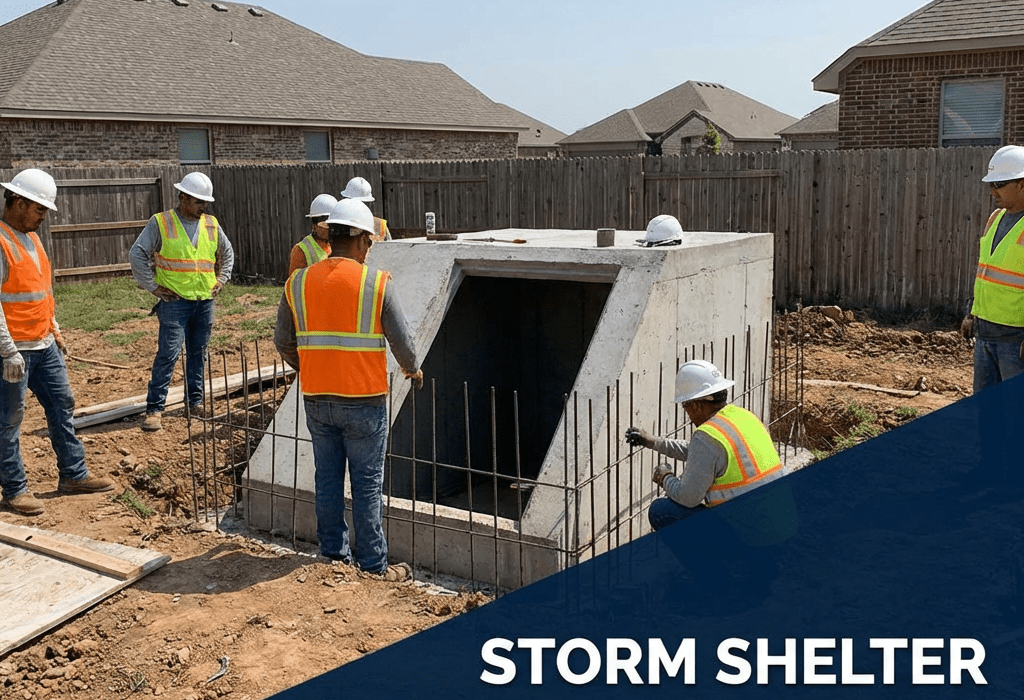
Storm Shelter Construction: Strength & Durability
Storms can hit fast.
When they do, you want a safer place.
A storm shelter is built for one purpose.
It protects people during severe weather.
But not all shelters are built the same.
So it helps to understand what “strong” means.
Stacy Building Co. says their storm shelters are built for strength, safety, and long‑term durability, using reinforced materials and simple, solid construction. [stacybuildings.com]
This guide explains the basics in plain words.
What “strength” means in a storm shelter
Strength is not just thick walls.
Strength is how the whole shelter works together.
A strong shelter focuses on:
- the walls
- the roof or top
- the floor or base
- the door and frame
- the connections between all parts
When those parts work as one, the shelter is stronger.
Why durability matters
Durability is how the shelter holds up over time.
A durable shelter should:
- stay solid for years
- resist wear
- keep the door working smoothly
- stay ready when you need it most
That matters because storms happen more than once.
Standards and guidance (simple explanation)
You may see shelters marketed in many ways.
Some claims can be confusing.
Two common references are:
- FEMA safe room guidance [fema.gov], [fema.gov]
- ICC 500 storm shelter standard [codes.iccsafe.org], [fema.gov]
FEMA explains that a safe room is designed to meet FEMA criteria and provide near‑absolute protection in extreme wind events. [fema.gov], [fema.gov]
FEMA also states it does not endorse, approve, certify, or recommend contractors or products. And companies should not claim “FEMA approved” or “FEMA certified.” [fema.gov], [fema.gov], [fema.gov]
So instead of trusting a label, ask for the design basis.
ICC 500 is described as a standard that provides minimum design and construction requirements for storm shelters and includes life-safety basics like egress, lighting, ventilation, fire safety, and floor space. [codes.iccsafe.org], [fema.gov]
The big idea: strong connections
A shelter can only be as strong as its weak spot.
Weak spots are often:
- corners
- seams
- connections
- door frames
- anchors to the floor or foundation
ICC 500 includes items in construction documents that call out things like roof and wall connections, connections to the foundation, and protection of critical components. [codes.iccsafe.org]
In simple terms:
Good connections help the shelter act like one solid unit.
Doors matter a lot
A door is not “just a door.”
It is part of the shelter system.
Industry testing descriptions for ICC 500 include impact and pressure testing for storm shelters and components like doors and other opening protection. [intertek.com], [fema.gov]
That’s why a strong door and frame matters.
It helps keep the shelter closed and protected.
Testing and proof (what you can ask for)
If you want confidence, ask for documentation.
For example, third-party testing descriptions explain that ICC 500-related testing can include impact, static pressure, and cyclic pressure testing. [intertek.com], [icc-es.org]
You do not need to become an engineer.
You just need clear answers.
A simple checklist: What to ask your builder
Use these questions:
What standard or guidance does the design follow?
Ask about ICC 500 and FEMA safe room guidance. [codes.iccsafe.org], [fema.gov]What is the plan for connections and anchoring?
ICC 500 highlights connections to roof, walls, and foundation as key items. [codes.iccsafe.org]What is the plan for the door and frame?
ICC 500 testing descriptions include components like doors. [intertek.com], [fema.gov]Can you share documentation for the shelter or components?
Some testing services describe ways manufacturers demonstrate compliance through testing. [icc-es.org], [intertek.com]Do you claim “FEMA approved”?
FEMA says firms should not claim that. [fema.gov], [fema.gov]
Why choose Stacy Building Co.
Stacy Building Co. lists storm shelters as a service and describes them as built with reinforced materials and simple, solid construction for long-term protection. [stacybuildings.com]
They also list service area and contact details on their location page. [stacybuildings.com]
Get a Free Quote
Call (877) 872‑2276 or email sales@stacybuilding.com.
a { text-decoration: none; color: #464feb; } tr th, tr td { border: 1px solid #e6e6e6; } tr th { background-color: #f5f5f5; }
a { text-decoration: none; color: #464feb; } tr th, tr td { border: 1px solid #e6e6e6; } tr th { background-color: #f5f5f5; }
a { text-decoration: none; color: #464feb; } tr th, tr td { border: 1px solid #e6e6e6; } tr th { background-color: #f5f5f5; }
a { text-decoration: none; color: #464feb; } tr th, tr td { border: 1px solid #e6e6e6; } tr th { background-color: #f5f5f5; }
a { text-decoration: none; color: #464feb; } tr th, tr td { border: 1px solid #e6e6e6; } tr th { background-color: #f5f5f5; }