Storing hay properly is critical for protecting its nutritional value, preventing mold, and reducing fire risk. One of the most important factors in long‑term hay preservation is choosing the right hay barn materials—especially for roofing, siding, and ongoing maintenance. The right materials can significantly reduce moisture problems, weather damage, and repair costs over time.
This guide breaks down the best materials for hay barn construction, explains their advantages, and shares practical maintenance tips to help your barn last for decades.
Why Hay Barn Materials Matter
Hay is highly sensitive to moisture and poor ventilation. Even small leaks or condensation issues can lead to:
- Mold growth and spoilage
- Reduced feed quality
- Increased fire risk from spontaneous combustion
- Structural damage to the barn itself
Choosing durable, weather‑resistant materials helps protect both your investment in hay and the structure storing it.
Best Roofing Materials for Hay Barns
Metal Roofing (Most Popular Choice)
Metal roofing is the top choice for hay barns due to its durability and performance.
Advantages:
- Excellent moisture resistance
- Long lifespan (often 40+ years)
- Fire‑resistant
- Reflects heat, reducing condensation buildup
- Low maintenance
Best Options:
- Galvanized steel
- Galvalume panels
- Painted steel panels for added corrosion protection
Metal roofs are especially effective in regions with heavy rain, snow, or strong sun exposure.
Asphalt Shingles (Less Common)
While common in residential buildings, asphalt shingles are less ideal for hay barns.
Pros:
- Lower upfront cost
- Easy installation
Cons:
- Shorter lifespan
- Higher fire risk
- More prone to moisture retention
Asphalt shingles are generally not recommended for large‑scale hay storage.
Best Siding Materials for Hay Barns
Metal Siding
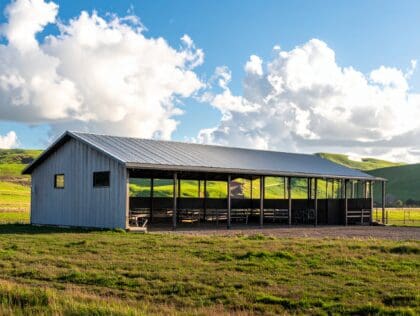
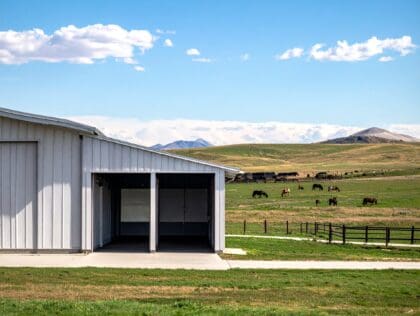
Metal siding pairs perfectly with metal roofing and offers excellent protection.
Benefits:
- Resists rot, pests, and moisture
- Reflects heat
- Easy to clean
- Long‑lasting with minimal upkeep
Metal siding is ideal for enclosed or semi‑enclosed hay barns.
Wood Siding (Traditional Look)
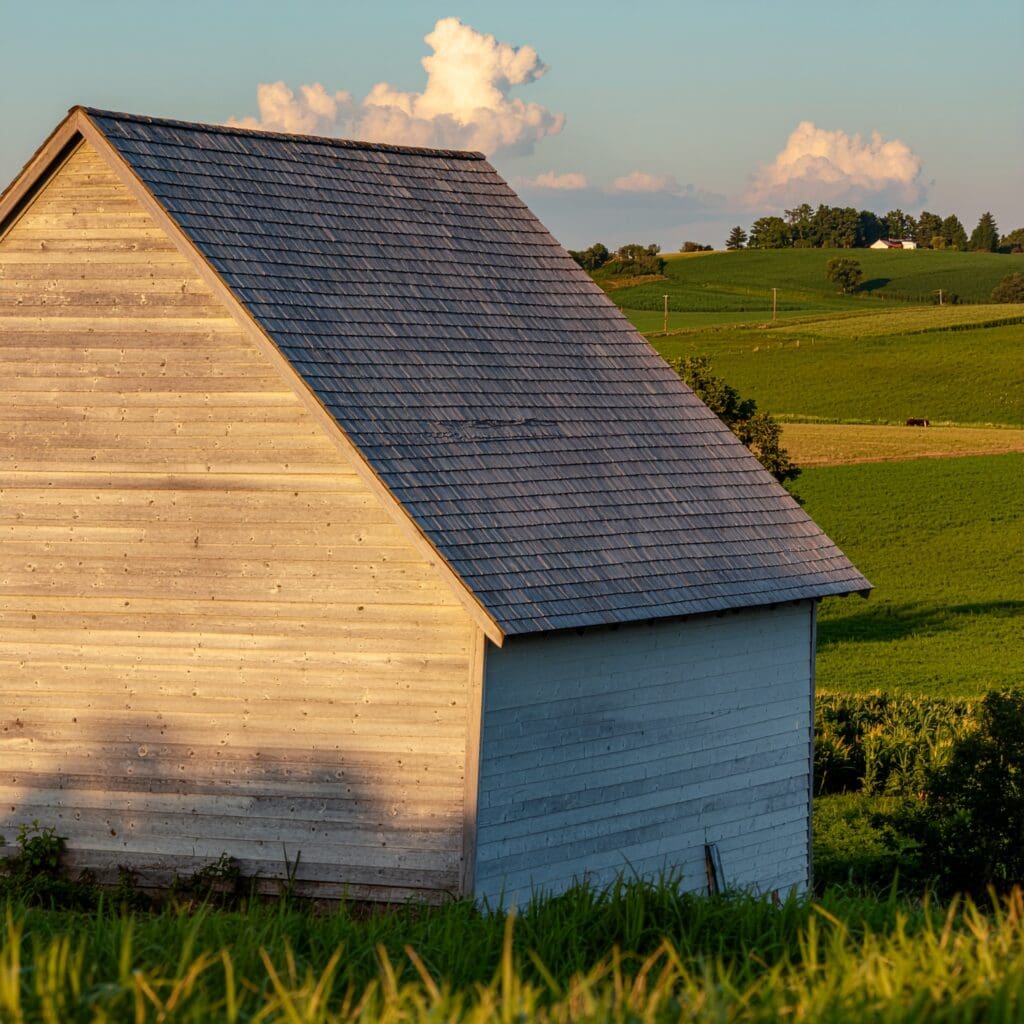
Wood siding offers a classic farm aesthetic but requires more maintenance.
Pros:
- Natural appearance
- Good insulation when properly installed
Cons:
- Susceptible to rot and insects
- Requires regular painting or sealing
- Higher long‑term maintenance costs
If used, treated lumber or engineered wood products are strongly recommended.
Open or Partial Siding (Ventilation‑Focused Design)
Some hay barns use partial siding or open walls to improve airflow.
Advantages:
- Improved ventilation
- Reduced moisture buildup
- Lower construction cost
This approach works best in dry climates and when barns are positioned to take advantage of prevailing winds.
Flooring and Foundation Considerations
While often overlooked, the foundation plays a major role in moisture control.
Best Practices:
- Concrete floors for durability and fire resistance
- Gravel bases for drainage
- Raised foundations to prevent ground moisture transfer
Avoid storing hay directly on bare ground whenever possible.
Essential Hay Barn Maintenance Tips
1. Inspect Roofing Regularly
Check for:
- Loose or missing panels
- Rust spots or corrosion
- Fastener wear
Early repairs prevent costly hay damage.
2. Control Moisture and Condensation
- Ensure proper ventilation
- Use ridge vents or side openings
- Avoid stacking hay too tightly
Good airflow is one of the most effective ways to preserve hay quality.
3. Clean Gutters and Drainage Areas
Poor drainage can lead to water pooling near barn walls or foundations, increasing moisture problems.
4. Monitor Hay Temperature
Fresh hay should be monitored during storage. Excess heat can signal moisture issues that may lead to spontaneous combustion.
5. Repair Siding and Structural Damage Promptly
Small gaps can allow rain, pests, and wind‑driven moisture inside the barn.
Choosing the Right Materials for Your Climate
Your location plays a major role in material selection:
- Humid climates: Metal roofing and siding with maximum ventilation
- Dry climates: Open‑sided barns may be sufficient
- Snowy regions: Steep metal roofs for snow shedding
- High‑wind areas: Reinforced framing and secure fasteners
Final Thoughts
Selecting the best hay barn materials for roofing, siding, and maintenance is essential for protecting hay quality and extending the life of your barn. Metal roofing and siding remain the most reliable options, offering durability, moisture resistance, and low maintenance. Combined with proper ventilation and regular inspections, these materials help ensure safe, efficient hay storage year after year.
Investing in the right materials upfront saves money, reduces waste, and protects one of your most valuable farm resources.