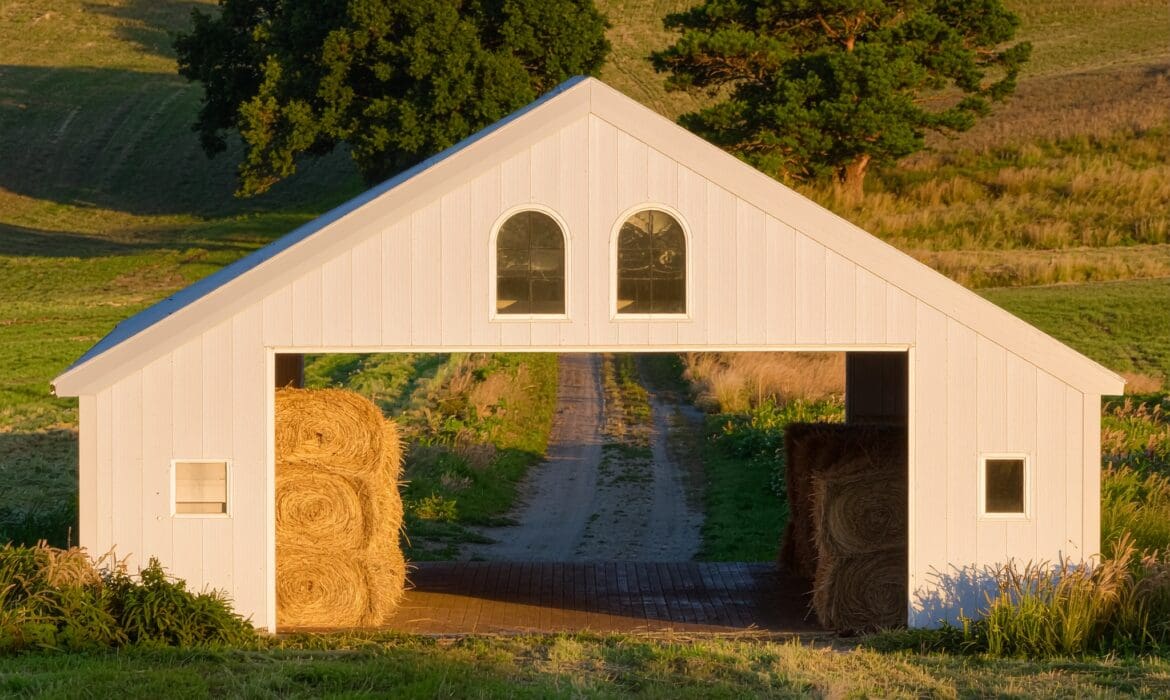
Hay is one of the most valuable assets on a farm, yet it’s also one of the easiest to lose to moisture, poor airflow, and improper storage. A well‑designed hay barn does more than keep rain off bales—it controls humidity, manages heat, and protects feed quality over time.
This guide explains how proper hay barn design focuses on ventilation, access, and moisture control, and why getting these elements right protects both your hay and your investment.
Why Ventilation Is Critical in Hay Barns
Freshly baled hay continues to release heat and moisture as it cures. Without adequate ventilation, this moisture becomes trapped, leading to mold growth, nutrient loss, and in severe cases, spontaneous combustion. [premiumhay…pplies.com], [farmstandapp.com]
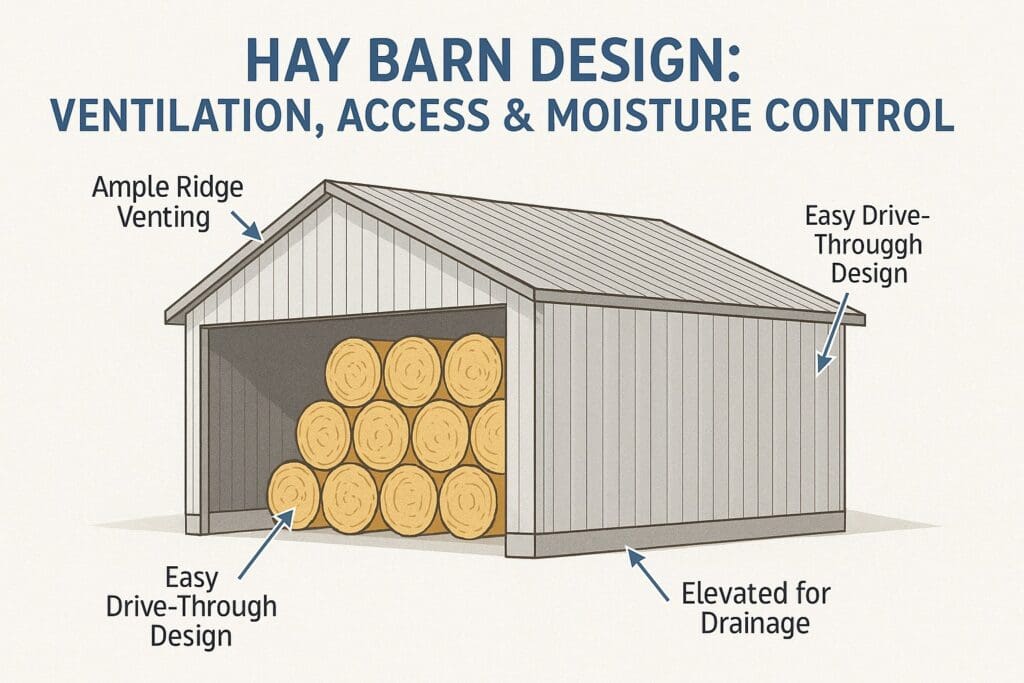
Effective ventilation allows warm, moist air to rise and exit the structure while pulling cooler, drier air in at lower points.
Key Ventilation Features
- Ridge vents or cupolas to release hot air at the roof peak
- Eave openings or open sides for intake airflow
- Clear airflow paths without obstructions
Passive ventilation systems are widely recommended because they work continuously without electricity and reduce long‑term maintenance needs. [engineerfix.com]
Designing for Moisture Control
Moisture is the enemy of stored hay. Even covered hay can spoil if ground moisture or condensation is not managed correctly.
Smart Moisture Control Strategies
- Elevated floors or gravel bases to prevent moisture wicking
- Proper site drainage that directs water away from the barn
- Adequate spacing between hay stacks and walls to allow airflow
- Sufficient clearance between hay and roof trusses to reduce condensation drip
Studies and field experience show that barns designed with moisture control can significantly reduce dry‑matter loss compared to uncovered or poorly ventilated storage. [engineerfix.com], [liveneat.com]
Access Matters More Than You Think
A hay barn that’s difficult to access costs time, increases equipment wear, and raises safety risks—especially during busy feeding seasons or poor weather.
Access Design Considerations
- Drive‑through layouts for easy loading and unloading
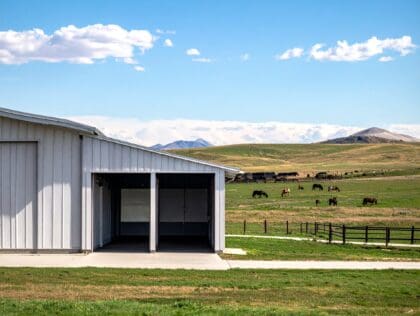
- Wide door openings to accommodate tractors and skid steers
- Clear interior spacing without posts blocking equipment paths
- Logical orientation based on prevailing winds and traffic flow
Good access design improves efficiency while reducing accidental damage to both equipment and stored hay. [hayandforage.com]
Choosing the Right Barn Style
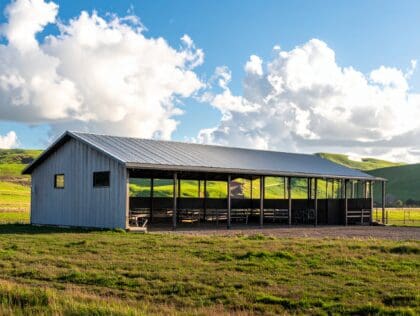
Many operations choose post‑frame hay barns because they balance cost, speed of construction, and functional design. Open‑sided or partially enclosed post‑frame barns are especially effective at providing natural ventilation while protecting hay from direct weather exposure. [engineerfix.com]
The best design depends on:
- Bale type (round vs square)
- Storage volume
- Climate and prevailing winds
- Equipment size and handling needs
Final Thoughts
A well‑designed hay barn protects feed quality, improves safety, and saves money year after year. By prioritizing ventilation, access, and moisture control, farmers and property owners can dramatically reduce spoilage, extend hay life, and improve daily efficiency.
✅ Call to Action
If you’re planning a new hay barn or upgrading an existing structure, design decisions made early can prevent costly problems later.
Call (877) 872‑2276 to discuss hay barn design options built for ventilation, access, and moisture control.