Written to educate, set expectations, and convert readers into leads, this article explains the post‑frame home build process clearly and confidently—without jargon or guesswork.
Post‑Frame Home Build Process: Timeline, Steps & What to Expect
Building a home is a major investment, and one of the most common concerns homeowners have is not knowing what to expect along the way. The post‑frame home build process is often simpler and more efficient than traditional construction, but understanding each phase helps you plan confidently and avoid surprises.
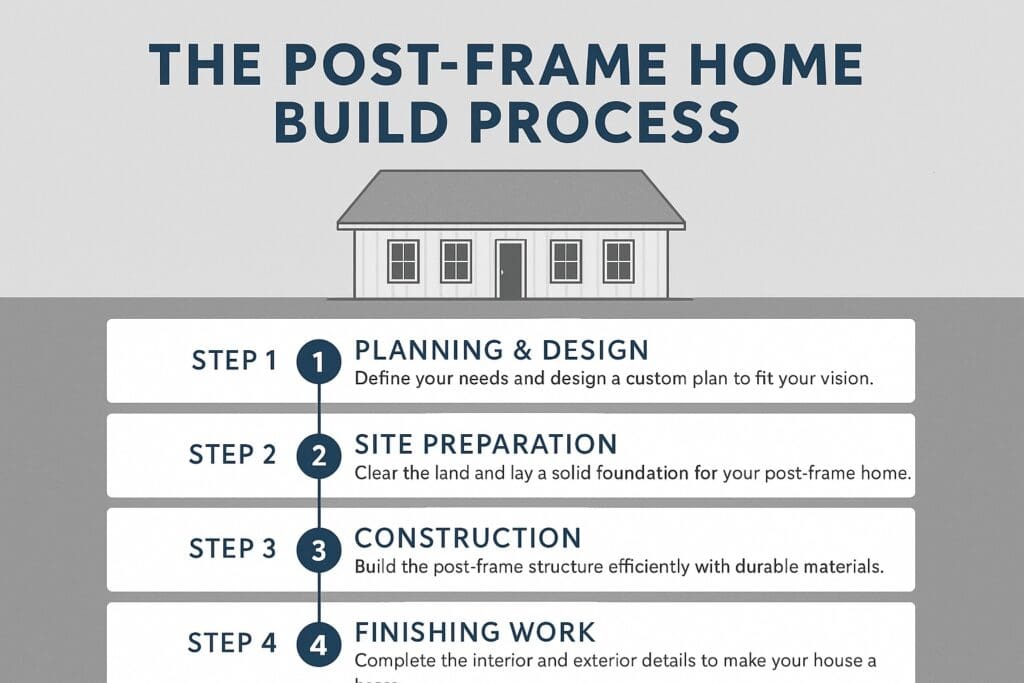
This guide walks through the post‑frame home build process step by step, from early planning to final completion, so you know how the project typically progresses and where key decisions are made.
Step 1: Planning, Design & Budget Alignment
Every successful post‑frame home starts with planning. This phase focuses on turning ideas into a buildable plan while aligning expectations around layout, size, and budget.
During planning, homeowners typically decide:
- Overall square footage and layout
- Open‑concept vs. defined rooms
- Storage needs (garage, shop, utility space)
- Exterior style and materials
- Long‑term use of the home
Post‑frame construction offers flexibility early on, making it easier to design open spans, integrated storage, and adaptable layouts without structural limitations.
Step 2: Site Evaluation & Preparation
Once the design direction is set, the building site is evaluated and prepared. This includes:
- Confirming access, grading, and drainage
- Locating utilities or planning connections
- Preparing the building pad or foundation area
Proper site preparation is critical to ensuring the structure performs well long‑term. Post‑frame homes are often well‑suited to a variety of site conditions, which can simplify this stage compared to some traditional builds.
Step 3: Foundation & Structural Layout
After the site is ready, the foundation or footing system is installed based on the engineered design. Post‑frame homes may use slab foundations, piers, or other engineered solutions depending on the project.
Once the foundation system is complete:
- Structural post locations are laid out
- Posts are set and secured
- The structural framework begins to take shape
This stage sets the backbone of the home and allows the rest of the build to move efficiently.
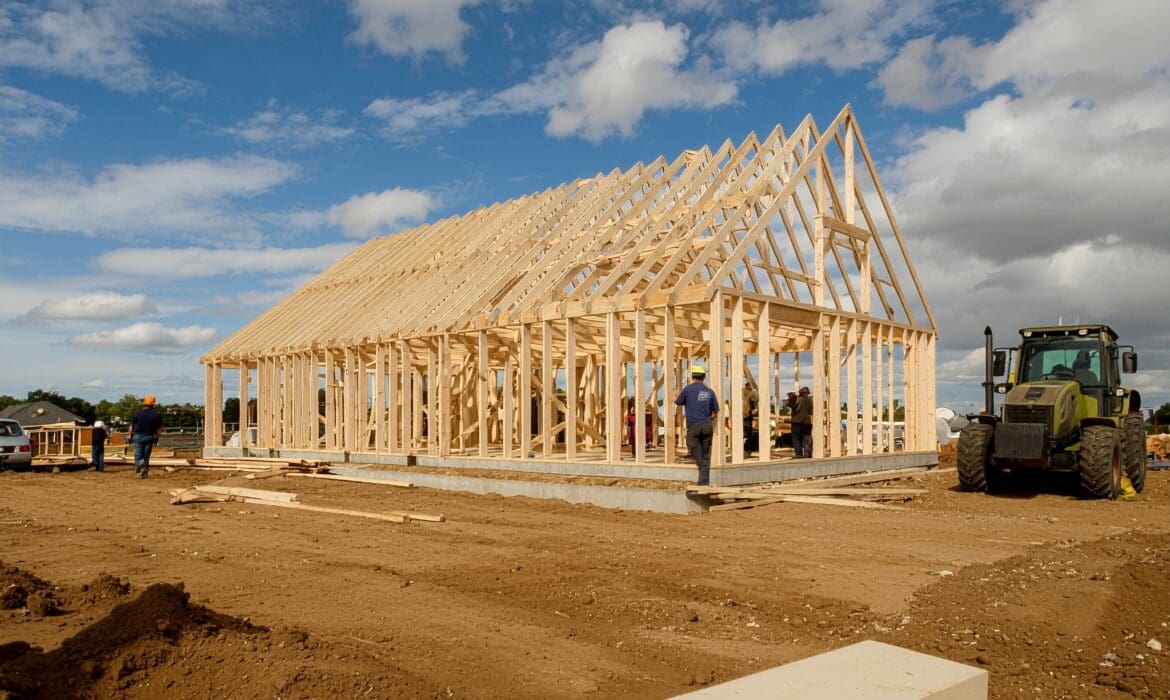
Step 4: Framing & Open‑Span Structure
One of the most exciting phases of the post‑frame build process is structural framing. Because post‑frame construction relies on widely spaced posts rather than interior load‑bearing walls, the structure often comes together quickly.
During framing:
- Roof trusses are installed
- Exterior walls are framed
- Open interior spans become visible
At this point, homeowners can clearly see the scale of open living areas, ceiling height, and overall layout.
Step 5: Exterior Shell & Weather Protection
With the structure framed, the exterior shell is installed to protect the home from the elements. This typically includes:
- Roofing
- Exterior wall materials
- Windows and exterior doors
Once the building is “dried in,” interior work can proceed without weather delays. This milestone marks a major transition from structural construction to finishing stages.
Step 6: Mechanical Systems & Insulation
After the shell is complete, mechanical systems are installed. This phase includes:
- Electrical wiring
- Plumbing
- HVAC systems
- Insulation and air sealing
Post‑frame homes allow for efficient insulation strategies due to deeper wall cavities and fewer framing interruptions. When done correctly, this stage supports comfort, energy efficiency, and long‑term performance.
Step 7: Interior Finishes
With systems in place, interior finishes bring the home to life. This stage typically includes:
- Drywall and interior wall finishes
- Flooring
- Cabinets and countertops
- Interior doors and trim
- Paint and final detailing
Because interior walls are often non‑load‑bearing, layouts feel open and customizable—another advantage of post‑frame construction.
Step 8: Final Walkthrough & Completion
Before completion, a final walkthrough ensures everything meets expectations and specifications. Any adjustments or touch‑ups are addressed, and the home is prepared for move‑in.
At this point, homeowners receive a finished post‑frame home designed for durability, flexibility, and long‑term use.
Why Many Homeowners Choose the Post‑Frame Build Process
The post‑frame home build process is appealing because it often offers:
- Clear, logical construction stages
- Efficient timelines
- Flexible design options
- Open, adaptable floorplans
- Integrated storage and living space
For homeowners who want a straightforward build experience with fewer structural limitations, post‑frame construction is a strong option.
Final Thoughts
Understanding the post‑frame home build process helps remove uncertainty and builds confidence before construction begins. From planning through completion, each phase follows a practical sequence designed to deliver strength, efficiency, and flexibility.
✅ Call to Action
If you’re considering a post‑frame home and want to understand how the build process would work for your land, layout, and goals, a conversation early in planning makes all the difference.
Call (877) 872‑2276 to discuss the post‑frame home build process and next steps.