Hay Storage Mistakes to Avoid: Protect Feed & Reduce Waste
Storing hay the right way is one of the most important steps in protecting your investment, maintaining livestock health, and reducing unnecessary waste. Whether you’re running a small family farm or managing a large-scale operation, proper hay storage can save you thousands of dollars each year. Unfortunately, many common mistakes lead to moisture damage, mold growth, nutrient loss, and even safety hazards. Understanding what to avoid—and how to store hay correctly—helps ensure your feed stays clean, dry, and ready when you need it.
1. Storing Hay Directly on the Ground
One of the biggest mistakes producers make is placing hay bales directly on soil or grass. Ground contact allows moisture to wick upward, causing rot and mold from the bottom up. Even a few inches of elevation can make a major difference. Using pallets, gravel, or a raised concrete pad helps keep bales dry and extends their usable life.
2. Poor Ventilation Inside the Storage Building
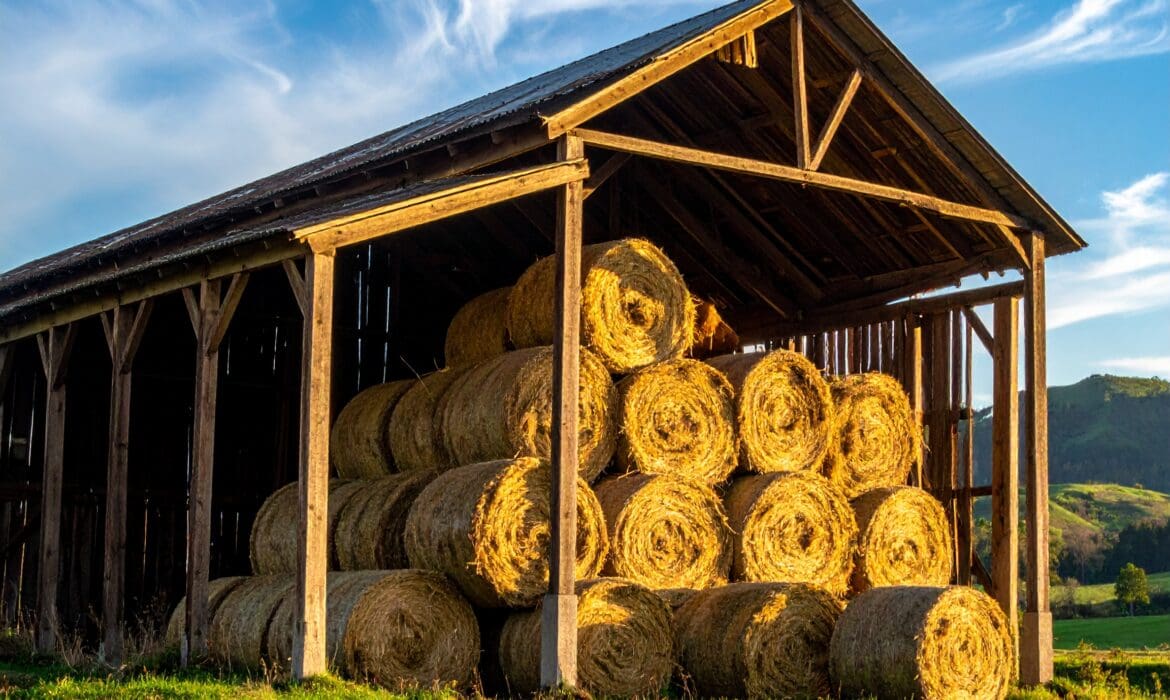
Hay needs airflow to stay dry and stable. Without proper ventilation, trapped humidity can lead to condensation, mold, and even spontaneous combustion in tightly packed bales. A well‑designed hay barn includes ridge vents, sidewall openings, and strategic spacing to promote natural airflow.
3. Overpacking the Barn
It’s tempting to maximize every inch of space, but stacking hay too tightly restricts airflow and increases the risk of heat buildup. Leave space between stacks and avoid pushing bales directly against walls. A little breathing room goes a long way in protecting your feed.
4. Ignoring Roof Leaks or Structural Issues
Even a small roof leak can ruin an entire row of hay. Regular inspections of your barn’s roof, siding, and foundation help prevent water intrusion. Post‑frame hay barns are especially effective because they offer strong, weather‑resistant protection with minimal maintenance.
5. Storing Hay Outdoors Without Proper Cover
While outdoor storage is common, uncovered bales lose significant nutrients and can develop mold quickly. If outdoor storage is unavoidable, use high‑quality tarps, elevate the bales, and orient rows to shed water efficiently.
Protect Your Investment With a Purpose‑Built Hay Barn
A well‑designed hay barn is the best defense against moisture, pests, and waste. At Stacy Building Co., we engineer durable, weather‑resistant hay barns that keep your feed protected year‑round. With proper ventilation, strong roofing, and customizable layouts, our structures help you reduce waste and maximize the value of every bale.